7 Things I Love Having in My Everyday Life
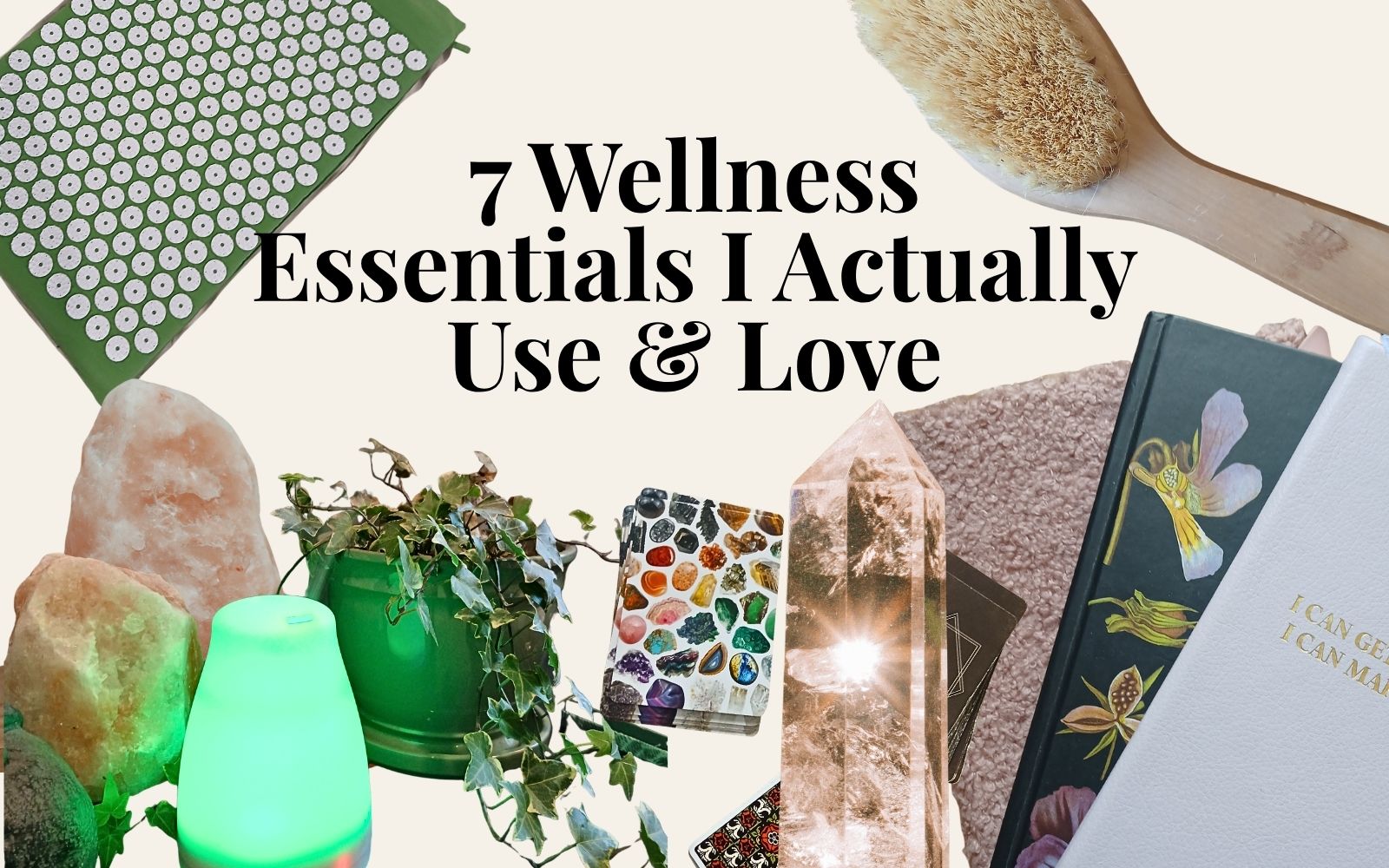
My personal favorites for well-being, home, and everyday routines
I've always been interested in exploring different ways to take care of my well-being. Over the years, I've tried quite a few things, and somehow my home has slowly filled with products that I've grown to love. Some have become part of my daily routine, while others I still wish I'd remember to use more often.
I'm especially interested in how small things can make a difference in how we feel, how we relax, and the atmosphere we create at home. I also love beautiful objects, so many of my favorites combine something practical with something I simply enjoy looking at.
I thought I'd share seven things I personally use and love. Along the way, I'll talk about why I use them, some of their benefits, and a few things worth knowing if you're thinking about trying them yourself.
Some of these I use every single day. Others, well, I remember them when I remember them.
I've picked out a few products from Amazon that are either the same as the ones I use or very similar. So if something catches your eye, I've included links to make them easier to find.
Some links in this post are affiliate links, which means I may earn a small commission if you make a purchase, at no extra cost to you.
As an Amazon Associate I earn from qualifying purchases.
1. Himalayan Salt Lamp
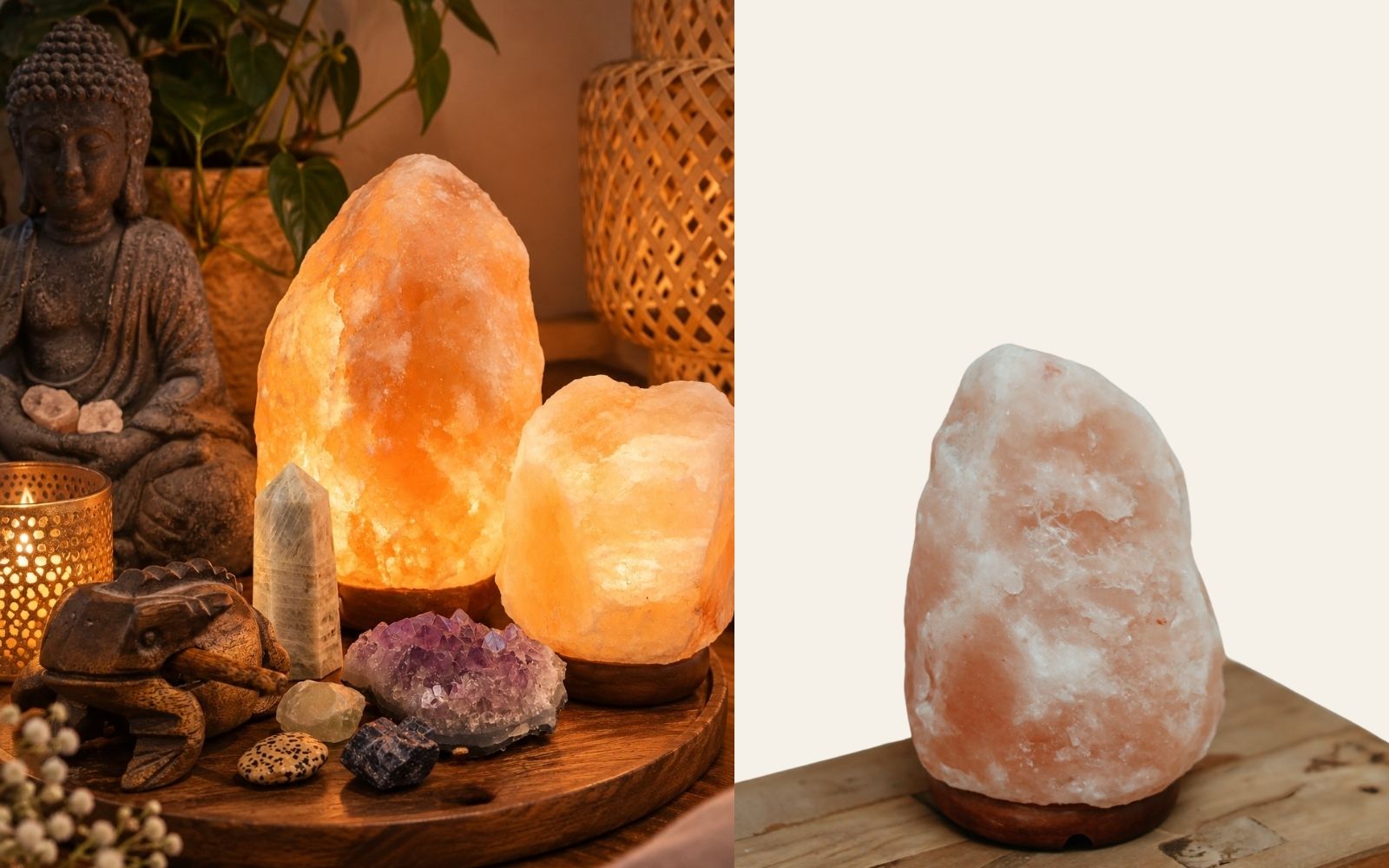
I have several Himalayan salt lamps at home, and they've been part of my bedroom decor for quite a while now. I love their warm, orange glow. Especially during autumn and winter, when it gets dark so early, I find their soft light much more pleasant than bright overhead lighting.
But Himalayan salt lamps are interesting for more than just their appearance.
They're often associated with air purification, negative ion production, and creating a relaxing environment. The idea is that when the salt warms up, it may interact with the surrounding air.
Negative ions occur naturally in places like waterfalls and forests, and researchers have explored their possible connection to mood and well-being. However, there's currently no convincing evidence that ordinary salt lamps produce enough negative ions to create those effects or noticeably purify indoor air.
What I do find interesting is the effect of lighting itself.
Bright light in the evening can interfere with the body's natural preparation for sleep, especially when it contains a lot of blue light. Warmer, dimmer lighting is generally a better choice when you're getting ready to wind down.
For me, that's one of the nicest things about salt lamps. Their soft orange light makes my bedroom feel cozy and creates a completely different atmosphere from having the main lights on.
One Thing Worth Knowing Before Buying a Salt Lamp
There are quite a few different versions available now, including LED models that don't really heat the salt itself.
If you're mainly looking for a beautiful decorative light, an LED version can be a great option.
But if you're interested in a traditional heated salt lamp, choose one with a heat-producing bulb. The warmth is part of the idea behind many of the wellness claims associated with these lamps, even though those claims haven't been reliably demonstrated.
I personally love the traditional ones, and I can definitely see myself having even more of them around the house.
🧡 Find a Himalayan salt lamp similar to mine
2. Acupressure Mat
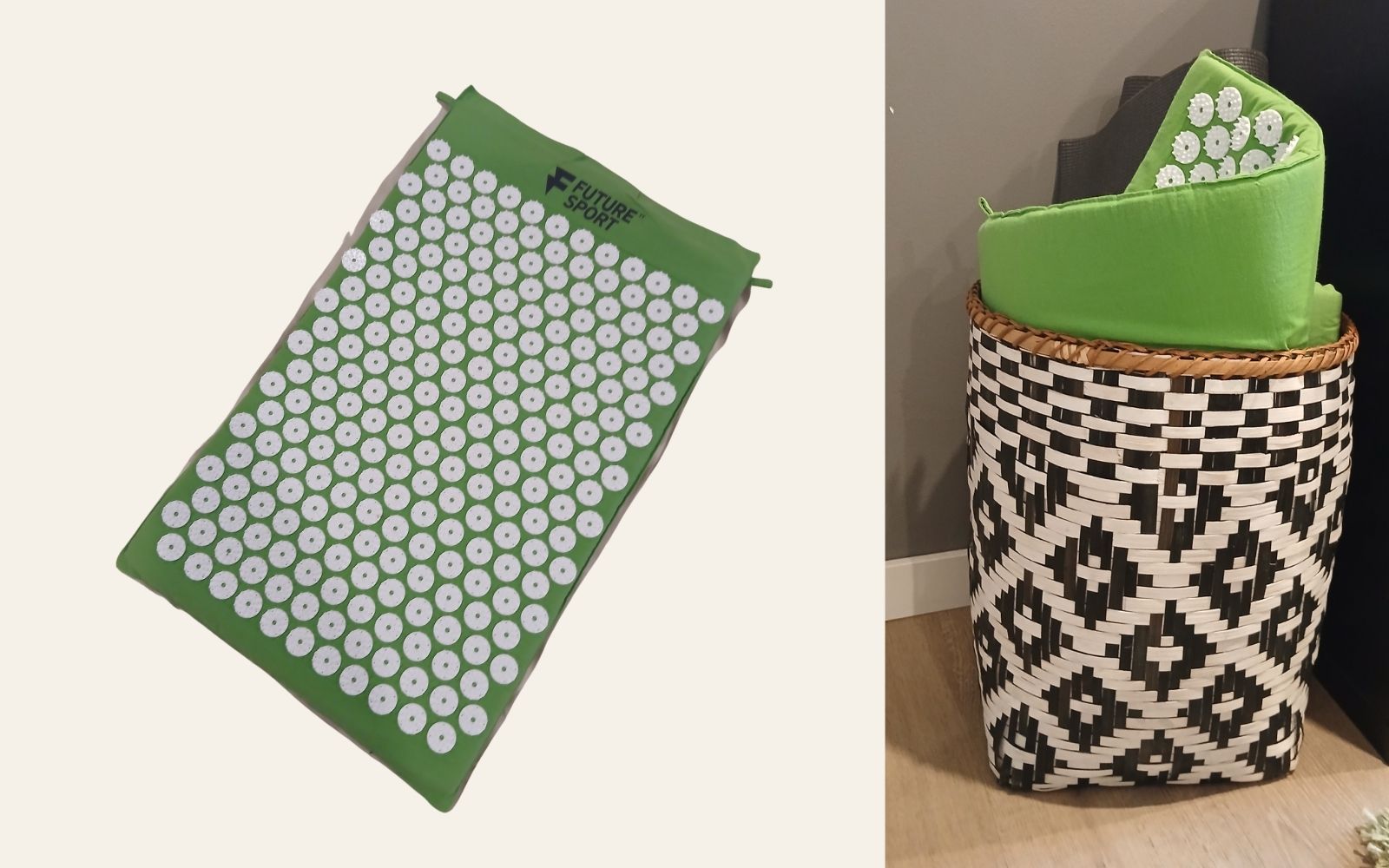
My acupressure mat actually came into my life through a recommendation from a somatic and energy practitioner.
I started seeing her during a time when I was dealing with an overactive nervous system, and she suggested trying an acupressure mat as part of my relaxation routine.
And it has honestly become one of my most-used purchases.
These days, I take my mat almost everywhere, even when I travel. I use it daily, usually in the evening before going to bed. Especially when I notice that I'm feeling overstimulated or struggling to settle down, lying on the mat feels really good.
At first, the spikes can feel quite intense, but after a little while, I usually notice myself relaxing.
Why Do People Use Acupressure Mats?
Acupressure mats have hundreds of small plastic spikes that apply pressure to the skin when you lie on them.
The pressure creates a strong physical sensation, which can make you more aware of your body and where you're holding tension.
Acupressure has traditionally been used to help with pain and muscle tension, and some research suggests that acupressure techniques may help with certain types of discomfort and relaxation.
Research specifically on acupressure mats is still fairly limited, but some small studies have reported improvements in perceived relaxation, stress, or pain.
One thing I personally appreciate is how the mat gives me something physical to focus on.
When my thoughts are racing, I sometimes find it easier to settle down when my attention shifts from everything happening in my head to what I'm actually feeling in my body.
And because I usually use it in the evening, it's also become a little signal to myself that the day is coming to an end.
How to Use an Acupressure Mat
If you've never tried one before, start with around five minutes.
Place the mat on your bed, sofa, or floor and lie down on it. You can keep a thin shirt on at first if the spikes feel too intense.
Once you get used to the sensation, you can gradually increase the time to around 10–20 minutes, depending on what feels comfortable.
You don't need to force yourself to stay on it if the pressure feels painful. And if you have particularly sensitive skin or a condition that affects your skin or sensation, it's worth checking whether this kind of pressure is suitable for you.
I personally love using mine in the evenings, but you can just as easily use it during the day.
If you often feel overstimulated or find it difficult to relax at night, this could be something worth exploring.
My own mat doesn't have a pillow, but I found a similar one that comes with an acupressure pillow too. I think that could be a really nice addition for the neck and shoulders.
🌿 Explore a similar acupressure mat with pillow
3. Dry Brushing
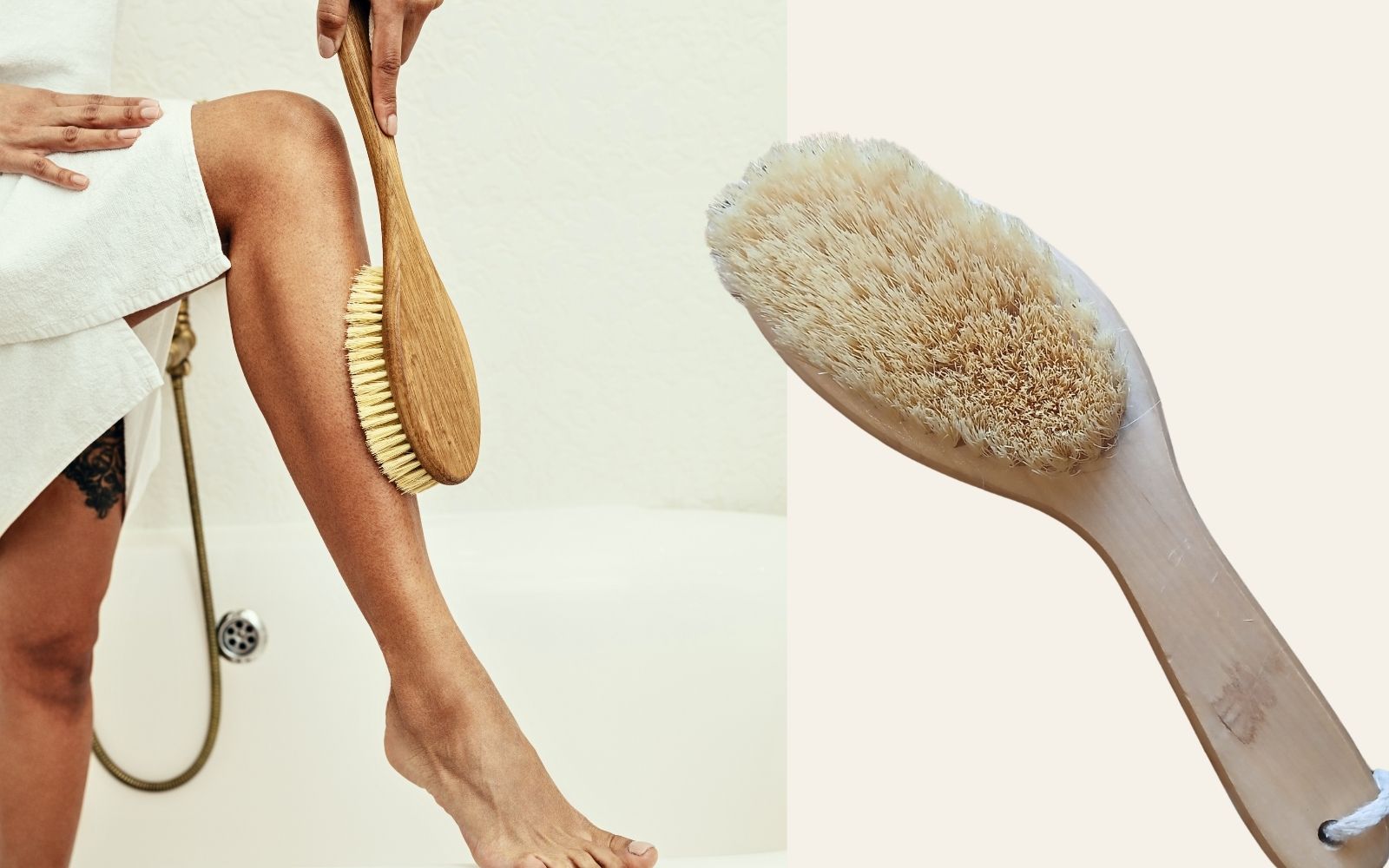
My dry brush is one of those things I bought for a good reason, but somehow still forget to use regularly.
Every time I remember to dry brush before a shower, I wonder why I don't do it more often.
It's such a simple thing, and I really like how my skin feels afterward.
What Are the Benefits of Dry Brushing?
The most noticeable benefit of dry brushing is exfoliation.
Our skin naturally sheds dead skin cells, but some can remain on the surface and make the skin feel rough or look dull. Brushing gently helps remove those surface cells, leaving the skin feeling smoother.
Dry brushing also temporarily increases blood flow near the surface of the skin because of the friction created by the brush. You might notice your skin looking slightly pink afterward, which is a normal response to gentle brushing.
Another reason dry brushing has become popular is its connection to lymphatic wellness routines.
The lymphatic system plays an important role in maintaining fluid balance and supporting the immune system. Unlike blood circulation, which is powered by the heart, lymph movement depends partly on muscle movement and other physical processes.
Dry brushing is often promoted as a way to stimulate lymphatic drainage, although there isn't good scientific evidence that ordinary dry brushing significantly improves lymph flow.
For me, the appeal is mainly the combination of smoother skin and taking a few minutes to do something nice for myself before a shower.
How to Dry Brush Your Body
Start with dry skin, before taking a shower.
Begin at your ankles and brush gently upward toward your thighs using long strokes.
Move to your arms, brushing from your wrists toward your shoulders.
Use gentle circular movements around your stomach.
Brush your back gently, working upward toward your shoulders.
Finish with a shower and apply moisturizer afterward if you like.
You don't need to press hard. Dry brushing shouldn't hurt or leave your skin irritated. Avoid brushing over broken, inflamed, or irritated skin.
I'd also love to try a facial dry brush at some point, although I'd choose one specifically designed for the more delicate skin on the face.
🤎Find a dry body brush similar to mine
4. Aroma Diffuser
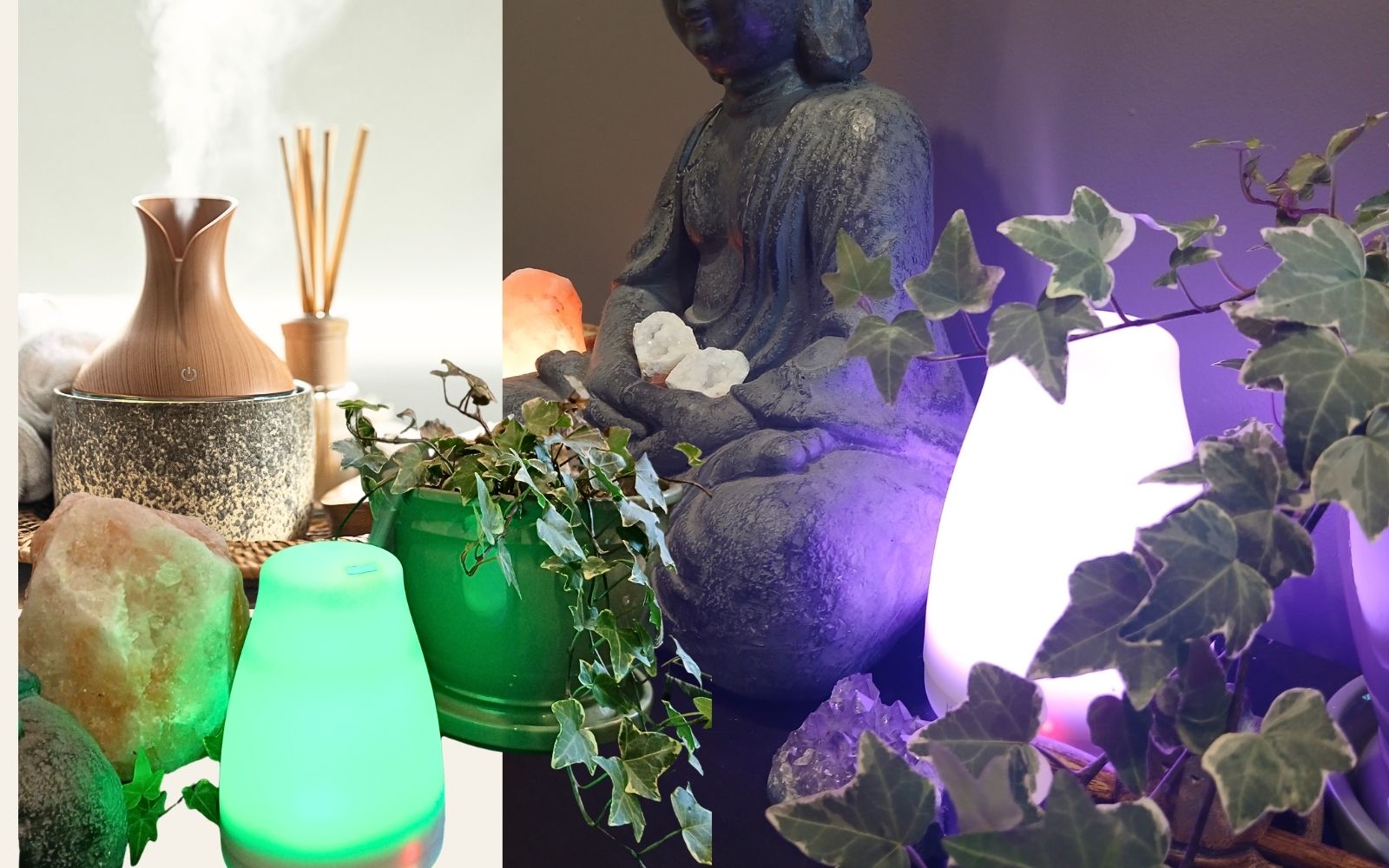
I love that even practical home devices can look beautiful these days.
My aroma diffuser is something I like having on display simply because I enjoy how it looks. I'm especially drawn to diffusers with color-changing lights. I love being able to choose a color that suits the mood or just let the lights change on their own.
I tend to use mine most when I feel like I'm coming down with something or my nose feels stuffy. In my experience, the moisture it releases can make breathing feel more comfortable, especially while sleeping.
Why I Like Using an Aroma Diffuser
There are actually a few different reasons people use diffusers.
The first is obviously the scent.
Our sense of smell is closely connected to brain areas involved in emotion and memory. That's why a familiar scent can sometimes bring back a memory almost instantly or remind you of a particular place or feeling.
I think that's part of what makes scents so interesting. You can associate certain smells with different moments in your life, and over time, they can become part of a familiar routine.
For example, using the same scent in the evening can become a little reminder that it's time to slow down.
The second reason is moisture.
Dry indoor air can irritate the nose, throat, and eyes, and adding moisture can help with that dry feeling. Some houseplants also benefit from appropriate indoor humidity.
However, it's worth knowing that aroma diffusers and humidifiers aren't exactly the same thing.
Many diffusers release only a small amount of water into the air and are mainly designed to disperse fragrance. A dedicated humidifier is generally a better option if your goal is to noticeably increase the humidity of a room.
5 Essential Oils to Try in Your Diffuser
One of the things I find fascinating about essential oils is how different scents can influence the way we experience a space.
Different essential oils have also been studied for their possible effects on mood, relaxation, and well-being.
Lavender | Relaxation & Sleep
Lavender is probably one of the best-known essential oils for relaxation. Its soft, floral scent is often used in evening routines, and some studies suggest that lavender aromatherapy may help improve perceived sleep quality and reduce feelings of anxiety.
I think it's a lovely choice for creating a peaceful atmosphere before bed.
Eucalyptus | Freshness & Breathing Comfort
Eucalyptus has a strong, fresh scent that's often associated with clear breathing.
Its main aromatic compound, eucalyptol, creates that distinctive cooling sensation. While inhaling eucalyptus oil hasn't been shown to treat nasal congestion, some people find the scent makes breathing feel more comfortable when they're feeling stuffy.
It's one of those scents I associate with feeling refreshed.
Sweet Orange | Mood & Positivity
Sweet orange has a bright, sweet citrus scent that can make a room feel instantly fresher.
Some small studies have explored whether inhaling sweet orange essential oil may help reduce situational anxiety and encourage a more positive mood.
I especially like the idea of using citrus scents in the morning or whenever I want my home to feel a little brighter.
Peppermint | Alertness & Focus
Peppermint has a strong, cooling scent that many people associate with feeling awake and refreshed.
Some research has explored its potential effects on alertness, attention, and perceived mental fatigue, although the results aren't consistent enough to promise a particular effect.
It's a nice option for daytime, especially if you prefer fresh scents over sweet or floral ones.
Frankincense | A Calm, Grounding Atmosphere
Frankincense has a warm, woody, slightly resinous scent that's often used during meditation and spiritual practices.
It's traditionally associated with reflection, calmness, and creating a peaceful environment.
I think it's a beautiful option for moments when you want to sit quietly, journal, or simply enjoy a slower evening.
How to Use an Aroma Diffuser
Fill the water tank to the recommended level.
If your diffuser is designed for essential oils, you can add a few drops of your chosen oil according to the manufacturer's instructions.
Turn it on, choose your preferred light setting, and enjoy.
Many diffusers can also be used with just water, which is something I like about mine.
Remember to change the water and clean the tank regularly.
If you're using it to add moisture to the air, keep an eye on the room's humidity level. Too much moisture can encourage mold growth, so more isn't always better.
Essential oils are highly concentrated, so you only need a small amount. Some scents can irritate sensitive airways, and certain essential oils can be harmful to pets, especially birds. It's worth checking what's suitable for your household before using them.
While aromatherapy is an interesting area of research, its effects can vary from person to person. Sometimes the biggest benefit is simply enjoying a scent that makes your home feel more inviting.
I found a diffuser very similar to the one I use myself, including the color-changing light feature, which is honestly one of my favorite things about it.
🌸Find a similar aroma diffuser with color-changing lights
5. Crystals
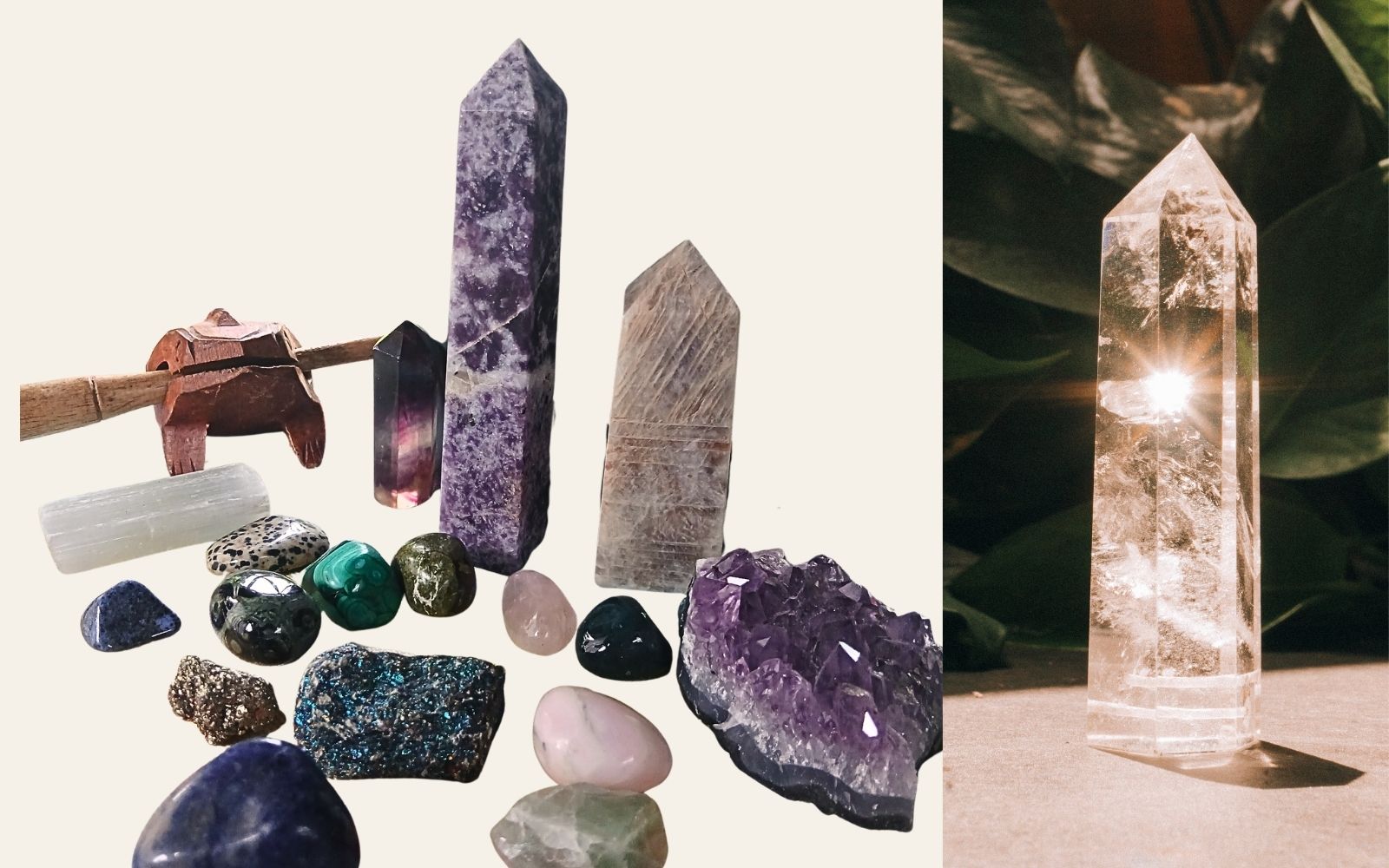
I can't even remember exactly when my interest in crystals began, but these days I have them in quite a few places.
They're especially part of my bedroom decor, but I also carry smaller crystals in my wallet, keep some in my car, and sometimes take them along when I travel.
There's something fascinating about crystals even before you get into their spiritual meanings. Their colors, shapes, textures, and the fact that no two pieces are exactly alike.
Different crystals are traditionally associated with different energies and meanings. Amethyst is often connected with calmness and intuition, rose quartz with love, and moonstone with new beginnings.
I don't even know the meanings of every crystal I own yet. It's something I'm genuinely interested in learning more about.
Why Crystals Can Feel Meaningful
I think one of the interesting things about crystals is that they can mean different things to different people.
For someone, a crystal might simply be a beautiful natural object. For someone else, it might represent an intention, a memory, or a particular period in their life.
In spiritual practices, crystals are often used as symbols of certain qualities or energies.
Although there's no scientific evidence that crystals themselves produce specific emotional or physical effects, the meaning we personally attach to an object can still be important.
For example, if you associate rose quartz with self-love, keeping it somewhere visible might remind you to treat yourself a little more kindly.
Or if you choose a crystal to represent courage, seeing it throughout the day can bring your attention back to something you're working toward.
I like that you can explore crystals in your own way, whether you're drawn to their spiritual meanings, their appearance, or both.
How to Use Crystals in Everyday Life
You can display crystals around your home, carry a small one in your bag or pocket, or include them in your daily routines.
For example, you might choose a crystal in the morning based on the kind of energy you'd like to invite into your day.
If you're looking for a little more courage, you could choose a stone traditionally associated with confidence. If you're craving calmness, you might reach for amethyst.
You can also hold a crystal for a moment and think about something you'd like to focus on or strengthen in your life.
Personally, I enjoy exploring both their spiritual meanings and their beauty as natural objects.
I'm actually hoping to add a few larger crystal pieces to my home next.
A Little Story About One of My Crystals
One of my crystals actually has its own little story.
I once had a lepidolite crystal that broke, and the experience made me reflect on the meaning I had attached to it and what was happening in my life at the time.
I ended up writing a separate blog post about it, because I think it's an interesting example of how personal our experiences with crystals can be.
💜 Read the story of my broken lepidolite crystal
Where I Like to Buy Crystals
I'm not including an affiliate link for crystals in this post.
You can absolutely order them online, but I personally recommend visiting a crystal shop if you have the chance.
I love taking my time looking at different stones and choosing one that catches my eye or whose energy I feel drawn to.
Sometimes a particular crystal just stands out to you, even when you don't know anything about its meaning yet.
If you don't have a crystal shop nearby, keep an eye out when you're traveling. I love exploring little crystal shops whenever I come across one. 💎
6. Tarot & Oracle Cards
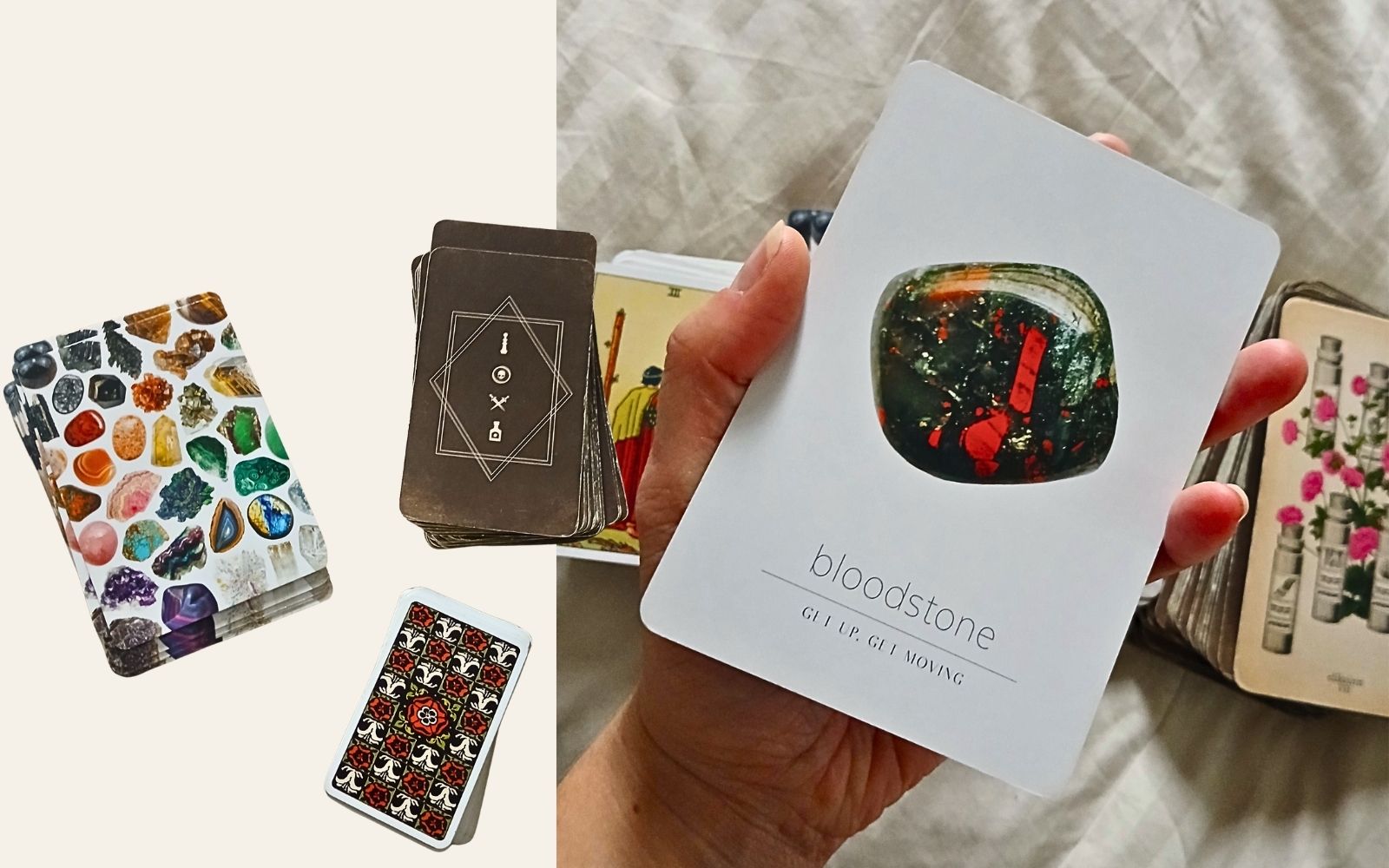
Tarot and oracle cards have become a really meaningful part of my everyday life.
My interest in them grew during a time when my life was changing quite a lot. I was going through some difficult experiences, trying to understand myself better, and figuring out what I actually wanted from my life.
During that time, I started turning to cards more often. Not because I expected them to make decisions for me, but because their messages helped me reflect on what I was experiencing.
Sometimes the messages felt almost surprisingly accurate, as if they were putting into words something I was already feeling but hadn't quite understood yet. Other times, they encouraged me to look at my situation from a completely different perspective.
What I found especially meaningful was how certain cards kept appearing during different stages of my life. Looking back, I can see how their messages connected with the things I was going through and the changes I was making.
How I Use Tarot and Oracle Cards
Most mornings, I pull three cards from three different decks.
I use both traditional tarot cards and crystal oracle cards, and I like how they offer slightly different perspectives.
Tarot has 78 cards, each with its own symbolism and traditional meanings. The cards explore different aspects of life, from relationships and emotions to decisions, challenges, and personal growth.
Oracle decks are a little different. They don't follow the same fixed structure as tarot, and each deck has its own theme and messages.
For example, crystal oracle cards often connect a particular crystal with a quality or intention, such as courage, patience, self-love, or new beginnings.
I haven't memorized every card meaning, so I often use the guidebooks or look things up online. Then I think about how the messages might relate to my own life.
For me, it's also about learning to trust my intuition. I pay attention to which messages stand out to me, what feelings they bring up, and what I personally take from them.
How Crystal Cards Helped Me During a Time of Change
One of the reasons crystal oracle cards became so important to me was that they offered a simple way to pause and check in with myself during a difficult period.
When you're going through a big life change, it can be hard to know what you actually need. Sometimes you're so focused on figuring everything out that you forget to ask yourself how you're doing.
That's something I experienced myself.
I remember pulling cards that encouraged me to trust my intuition, be patient with myself, or find the courage to take the next step.
Those messages didn't change my circumstances overnight, but they often helped me understand what was happening within me.
For example, a card about patience could make me realize how much pressure I was putting on myself to have everything figured out. A card about courage might bring my attention to something I'd been afraid to do.
And a message about new beginnings could remind me that even though I was leaving something familiar behind, there were also possibilities I hadn't explored yet.
I also started noticing how certain themes would repeat. Sometimes I would pull cards with similar messages several days in a row, and it made me pay closer attention to what was happening in my life.
Looking back, I think the cards became one of the ways I learned to listen to myself more closely.
Instead of constantly looking outside myself for answers, I started paying more attention to what I wanted, what I needed, and what felt right for me.
And that's still one of the main reasons I enjoy using them today.
Want to Try Pulling Your Own Cards?
You don't need any previous experience to get started.
You can simply shuffle your deck in the morning, pull one card, and read its meaning.
Then ask yourself:
- Does this message connect with anything I'm experiencing right now?
- What thoughts or feelings does it bring up?
- Is there something I'd like to pay more attention to today?
You can also write down the card and your thoughts in a journal. I think it's especially interesting to look back at those entries later and see what was happening in your life at the time.
Over time, you might start noticing certain cards or themes appearing repeatedly, too.
A Crystal Oracle Deck I Personally Lov
One deck I particularly want to recommend is Daily Crystal Inspiration by Heather Askinosie.
It's a 52-card crystal oracle deck that I received as a gift, and I've been using it almost every day since.
Each card features a crystal and a message connected to its meaning. What I especially love is the accompanying guidebook, which explains the messages and gives you something more to think about.
I think it's a lovely deck for someone who's interested in crystals but doesn't necessarily know much about their meanings yet.
And because the messages are often connected to things like self-trust, courage, boundaries, and personal growth, I've found them especially meaningful during times of change.
I've also created my own digital crystal cards, inspired by my interest in crystals and the different messages we can take from them.
But if you're looking for a physical deck, Daily Crystal Inspiration is one I genuinely recommend.
🔮Explore Daily Crystal Inspiration by Heather Askinosie
7. Journaling
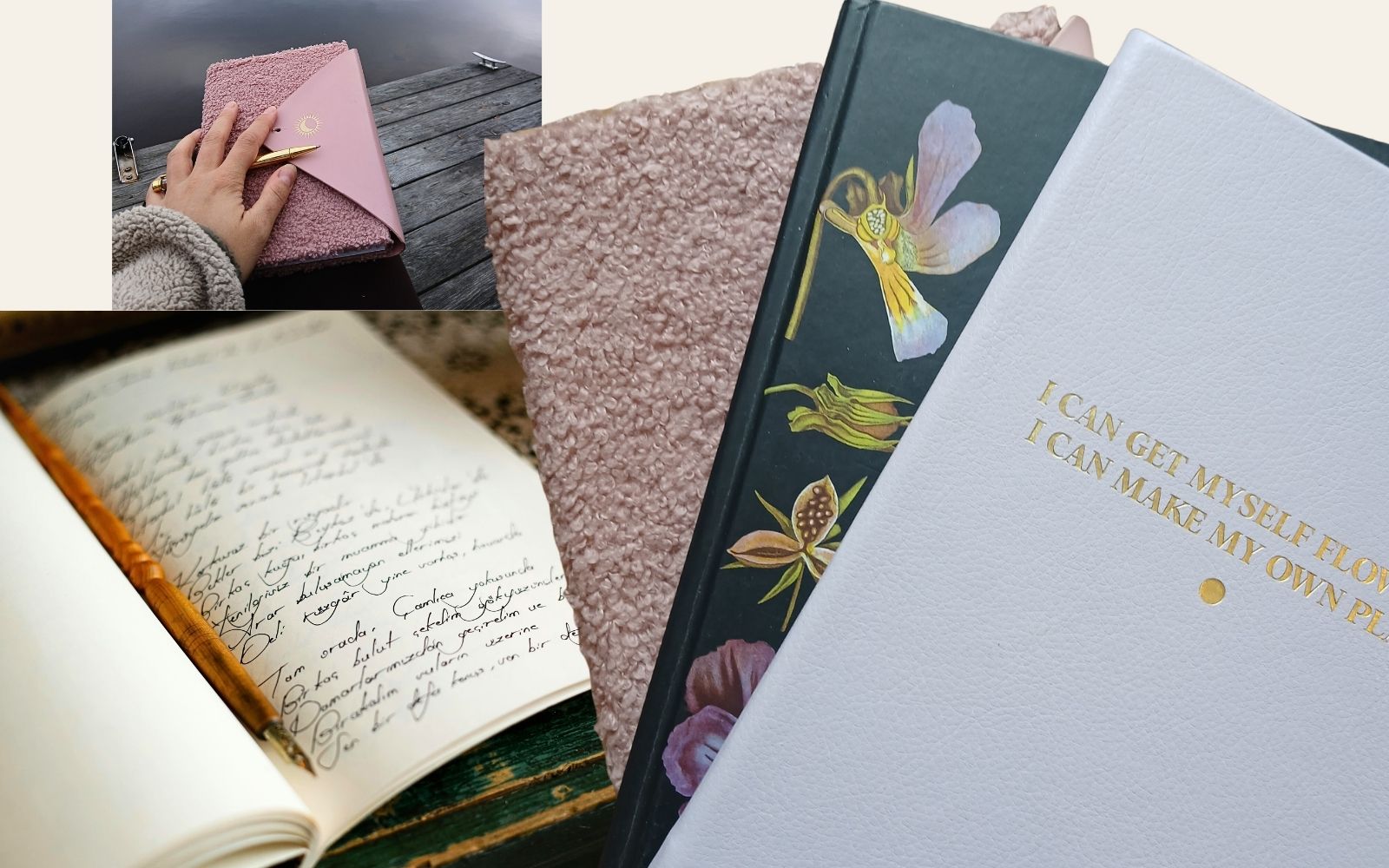
I've been journaling for around three years now, and it's become a pretty important part of my life.
I don't write every day, and I don't really try to. Sometimes I write a lot, and other times quite a while can pass without a single entry.
Especially when I have a lot on my mind, I like getting my thoughts out onto paper. Sometimes things feel much clearer when I can actually see what I'm thinking instead of going over the same thoughts in my head.
But I don't only write about difficult things.
I also love writing down happy moments, things I'm excited about, and little memories I don't want to forget.
And honestly, those entries are sometimes the nicest ones to read later. It's interesting to look back at what you were thinking a year or two ago, what mattered to you then, and how much your life has changed.
Why Journaling Can Be So Helpful
One reason journaling can feel useful is that writing encourages us to put our thoughts into words.
When everything stays in our heads, different worries, emotions, and ideas can easily get mixed together. Writing things down gives us a chance to separate them and look at them more clearly.
Research on expressive writing has explored how putting emotional experiences into words may support emotional processing and psychological well-being. The findings vary, and journaling isn't a solution to every difficult feeling, but it can be a useful tool for reflection.
Something I've personally noticed is that writing helps me recognize patterns in my own thinking.
Sometimes I'll read an old journal entry and realize I've been worrying about the same thing for months. Other times, I notice that something that once felt overwhelming doesn't affect me nearly as much anymore.
I also think there's something special about having a written record of your life.
Our memories change over time, and it's surprisingly easy to forget the small details of ordinary days. When I write down happy moments, I get to revisit them later in a way I wouldn't otherwise.
Want to Try Journaling?
You can start by writing for just a few minutes in the morning or before bed.
If you don't know what to write about, here are a few questions you could try:
- What's been on my mind lately?
- How am I feeling today?
- Is there something I'm grateful for right now?
- What would I like to remember about today?
You don't need to write beautifully or even make complete sentences.
Sometimes a few honest lines are enough.
And you definitely don't need to write every day to make journaling worthwhile.
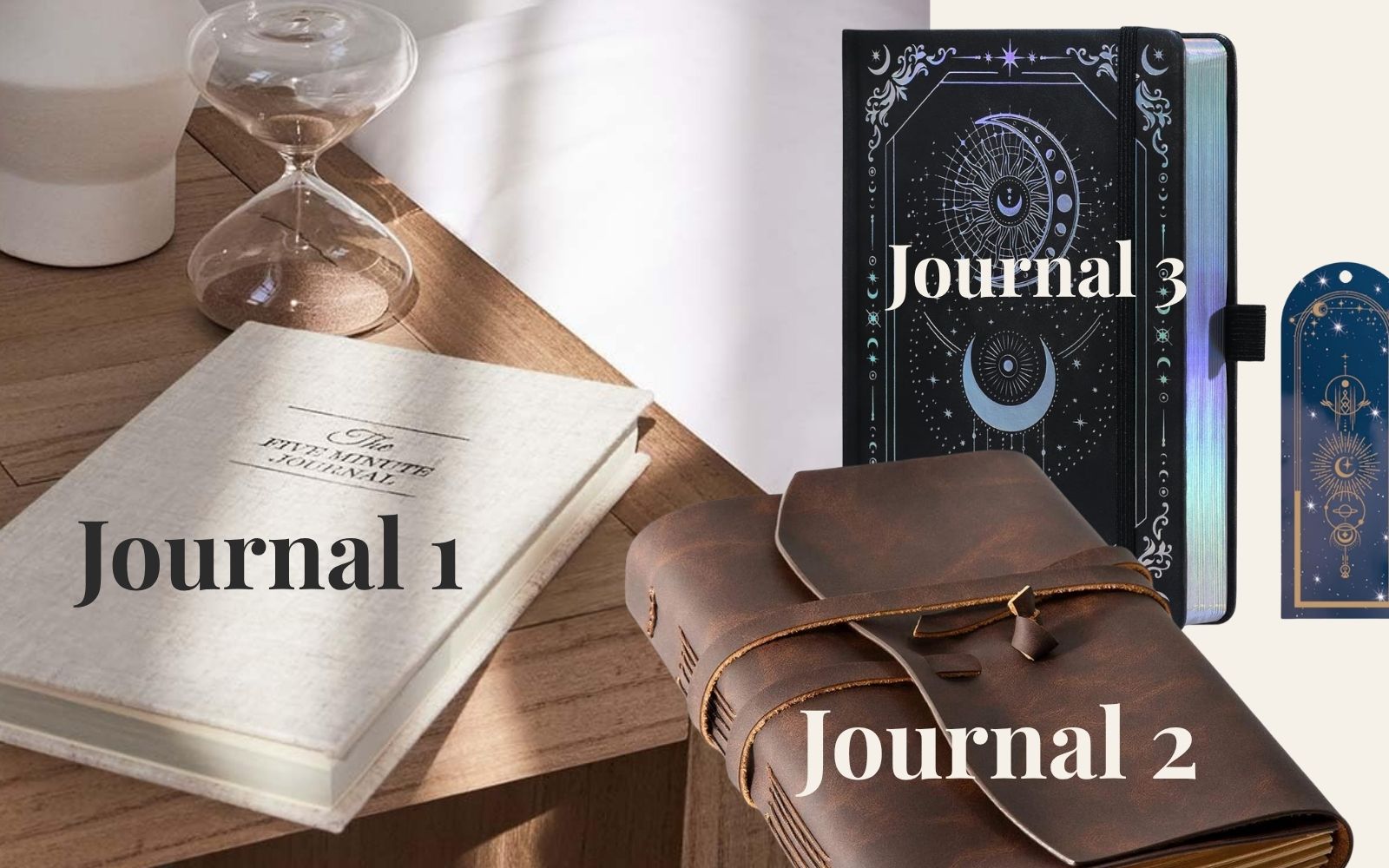
A Few Journals I Like
I also have a thing for beautiful notebooks.
Since I keep my old journals, I like choosing ones that I'll still enjoy looking at years from now.
I picked three options that caught my attention.
One is a guided journal with prompts and exercises, which could be a great place to start if you're not sure what to write.
The other two are regular notebooks that I chose simply because I love how they look.
📖 Explore a guided journal / journal 1
📕See my first notebook pick / journal 2
📜See my second notebook pick / journal 3
What About Your Everyday Life
Looking at this list, I realize that all these things have found their way into my life for different reasons.
Some have been part of my routine for years, others came along more recently, and a few are things I'd still like to use more often.
I'm always curious about trying new things related to well-being and spirituality, so I doubt this will be the last list of favorites I share.
What about your own everyday life? Is there a new habit or something you've been wanting to try that could improve your well-being, help you feel better, or simply make your days a little more enjoyable? 🤍
🔮 S / GS555